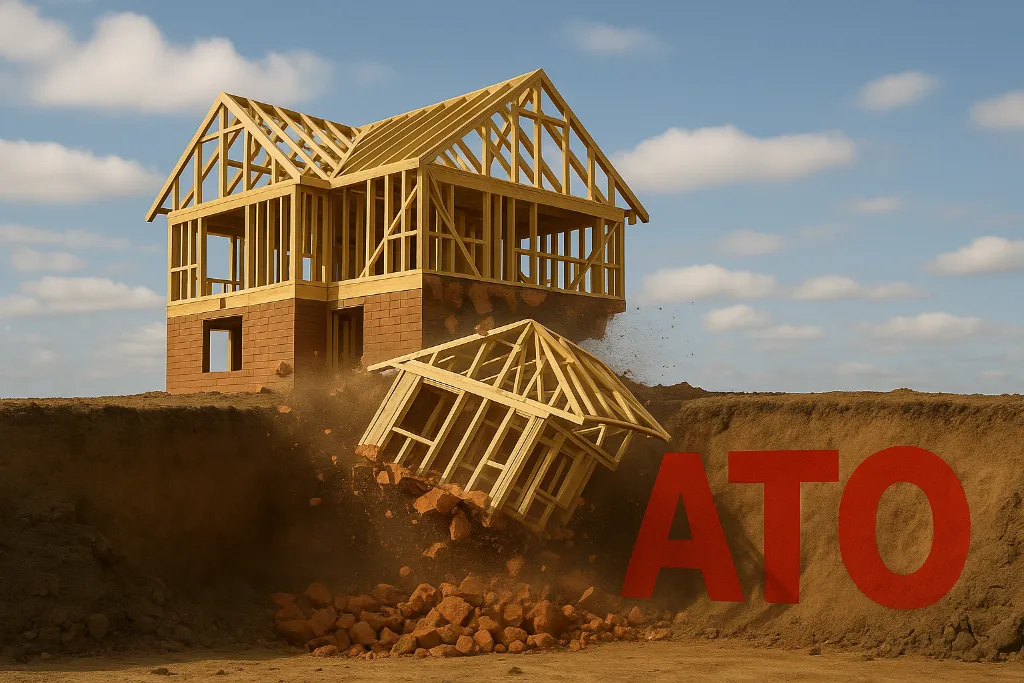
From 1 July 2025, interest charged by the ATO on overdue tax debts is no longer tax-deductible. For building companies, this change affects funding costs, cashflow, and critically, eligibility under both Domestic Building Insurance (DBI) in Victoria and Home Building Compensation (HBC) Cover in NSW (formerly Home Warranty Insurance).
For many builders, an ATO tax repayment plan appears to be a straightforward solution, however the flow-on effects can directly impact the ability to legally continue residential building work.
Tax repayment plans raise DBI and HBC Cover concerns
Insurance underwriters closely monitor a builder’s financial position. An ATO repayment plan is commonly treated as a sign of financial stress, leading to enhanced scrutiny.
Underwriters may respond by:
- reducing contract limits
- lowering profile limits
- delaying approvals
- requesting detailed financial reporting
- freezing eligibility increases
- or in serious cases, cancelling eligibility altogether
In Victoria, DBI is overseen by the Building & Plumbing Commission (BPC).
In NSW, residential builders require Home Building Compensation (HBC) Cover through icare (previously known as Home Warranty Insurance).
Both regulators treat overdue tax and repayment arrangements as material financial risk indicators.
Interest on ATO debt is no longer deductible
ATO interest has now become an after-tax expense. This makes repayment plans one of the most expensive financing options a building company can use.
By comparison, many commercial finance options used to refinance tax debt may allow interest to remain deductible, depending on structure and purpose. This often makes commercial funding a more financially sustainable solution.
Practical commercial impacts for builders
Builders typically manage:
- long project cycles
- irregular progress payments
- subcontractor pressures
- tight labour markets
An ATO repayment plan can trigger underwriter reassessment and immediate restrictions.
This may result in:
- delayed contract approvals
- enhanced monitoring
- lower profile limits
- requests for detailed cashflow information
- potential suspension of eligibility
For builders whose business relies on DBI or HBC Cover eligibility, these impacts can directly affect the capacity to start or complete work.
Alternative finance can safeguard DBI and HBC Cover
Commercial finance can be a safer approach because:
- interest may remain deductible
- underwriters often view external finance more favourably
- structured repayments assist planning
- DBI/HBC eligibility is less likely to be downgraded
In short, using commercial funding can help preserve insurance capacity at times when the business may be expanding or facing cost pressures.
Our view
ATO repayment plans should only be used as a last resort. They increase costs, signal financial stress, and expose builders to eligibility reductions under DBI in Victoria and Home Building Compensation (HBC) Cover in NSW.
Before agreeing to a repayment plan, builders should consider whether alternative finance may provide a more stable outcome—particularly where ongoing eligibility is essential to operating and taking on new work.
BEA Insurance Brokers can assist builders and advisers to assess the DBI and Home Building Compensation (HBC) Cover implications of repayment options and identify safer alternatives that protect future opportunity and operating capacity.